

Tenzin Nyidon
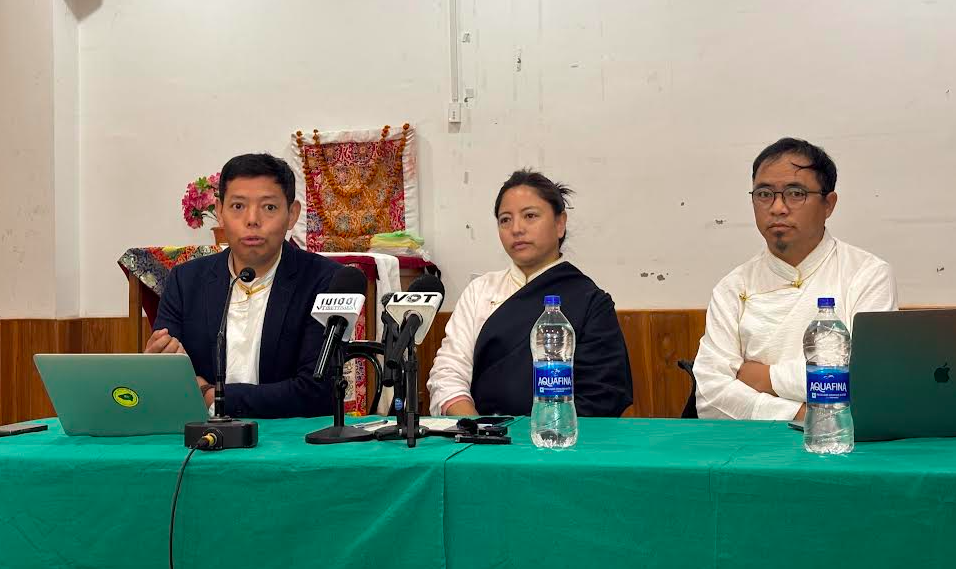
DHARAMSHALA, Dec. 3: Three candidates, two from U-Tsang and one from Dotoe, formally announced their candidacy for the 2026 Chitue (Parliament) elections at Dharamshala’s Tibetan Settlement Welfare Hall on Wednesday, each outlining priorities aimed at strengthening Tibetan democracy and advancing the Tibetan cause. The candidates are Tsering Tharchin and Dr. Sonam Tobgyal from the U-Tsang constituency, and Gyaltsen Chokyi the Dotoe constituency.
Tsering Tharchin, an independent researcher on China, said the purpose of holding the press conference was to address the lack of debates and public engagement in recent election cycles. He emphasized that candidates must reconnect with voters through press interactions, open discussions, and social-media outreach, noting that the public must be able to assess candidates based on their ideas, not merely on appearance.
He said his campaign is driven by the need to revitalize an active democratic culture. He highlighted how the community’s “short-term memory” has allowed past divisions, such as the 2021 parliamentary deadlock, to linger. He identified factionalism, regionalism, and personal ego as key obstacles, urging Tibetans to rise above narrow loyalties and prioritize the collective interest.
Drawing from his activism, including the 2012 Delhi movement, he said representatives must be actively involved in addressing core Tibetan issues rather than functioning as ceremonial figures. He pledged to push for stronger policies on China, raise international awareness, and communicate developments inside Tibet, such as the environmental impact of infrastructure projects, clearly to the public. With proficiency in Tibetan, English, and Chinese, he said he hopes to contribute with sincerity and a renewed sense of responsibility.
Dr. Sonam Tobgyal, a researcher at Tibet Watch, said his candidacy is grounded in the need to empower young Tibetans, overcome factional divides, and bring renewed focus to the worsening situation inside Tibet. He outlined three main reasons for entering the race.
He noted a generational shift within the exile community, now over seventy years old, and stressed that the younger generation must carry forward Tibetan traditions with fresh approaches and responsibility. The access to education and opportunities among today’s youth, he said, should translate into greater civic leadership.
Reflecting on the 15 years since His Holiness the Dalai Lama devolved political authority to elected leaders, he expressed concern over growing factionalism that has discouraged youth participation and weakened community cohesion. He emphasized the need for candidates who can rise above group loyalties and rebuild trust through unity.
Drawing on his 18 years of activism and research, he warned of the declining number of Tibet-focused activists in exile despite increasingly serious developments inside Tibet. With the next decade likely to be critical, he said, now is the time to take responsibility and speak out more forcefully.
Gyaltsen Chokyi, a Chinese-language teacher at the Norling Institute, outlined three key objectives for her candidacy; preserving the sacred Tibetan language, critically analyzing Chinese politics with depth and clarity, and presenting the situation inside Tibet effectively on the international stage. She emphasized that safeguarding linguistic heritage and strengthening political literacy are essential to ensuring that Tibetans can advocate confidently for their national cause.